Breath
息 · Iki
Every practice begins where the body already is — in the breath that is already arriving. The shakuhachi turns that breath into tone; the tone returns it as listening.

Breathe · Repeat
There is no destination, just a journey. A space for breath, the shakuhachi, and the long quiet practice of the road — kept by 行者 Gyōja, menkyo shihan of the Mujuan Ryu.
The name Gyōja (行者) names a practitioner who walks — an ascetic, a pilgrim, one who carries practice on the road. This site is a small clearing along that road: a place to breathe, to listen, and to leave word for other travellers. You are welcome to rest here a moment before walking on.
Gyōja is a student in the line of the Mujuan Ryu — founded in Kyoto by Yodo I Kurahashi and continued today under Yoshio Kurahashi in Kyoto and Stan Kakudo Richardson in Texas. The dojo's name draws from the Diamond Sutra — "Just when one has no place to dwell, such a spirit is born" — often rendered as "a temple where no priest resides."
Within that lineage the shakuhachi is not only a flute but a Hoki — a vessel for the practice of Suizen, blowing Zen. The training is simple in shape and long in depth: a slow out-breath drawn into the Hara, the tanden, the still center beneath the chest. One tone, then another. Breathe. Repeat.
Three small pillars hold this work together — they are not goals, only directions of attention.
Every practice begins where the body already is — in the breath that is already arriving. The shakuhachi turns that breath into tone; the tone returns it as listening.
A way is not a destination but a manner of walking. Day after day, the same simple tone is offered, and slowly the way teaches the walker how to be walked.
No wanderer walks entirely alone. Teachers, fellow travellers, the lineage, and the bamboo itself accompany the practice. We share the road, and the road grows wider for it.
Alberto Gyōja Battaglino studies shakuhachi within the Jin Nyōdō / Mujuan tradition, guided by his teacher Stan Kakudo Richardson. The work is carried as a quiet discipline of breath, tone, and attention.
In suizen, or blowing Zen, the flute is not approached only as an instrument for performance. One note becomes a place to listen: to the body, the room, the bamboo, and the silence around the sound.
Alberto served on the WSF Texas 2025 planning committee and joined the ensemble performance of 竹聲松影 Bamboo Voice, Pine Tree Silhouette.
A short set of notes on the people named in the lineage — not exhaustive histories, but signposts for listening, study, and gratitude.
Jin Nyōdō was a major twentieth-century shakuhachi master whose work helped preserve a broad range of temple honkyoku. He researched older regional styles, collected many pieces through direct transmission, and emphasized fidelity to each piece's source and character.
Read essayYodo Kurahashi I is remembered in this line as the first director of the Muju-An shakuhachi school in Kyoto and as the father and first teacher of Yodo Kurahashi II. Through him, the Jin Nyōdō stream continued into the Mujuan tradition.
Read essayKurahashi Yōdō II began studying shakuhachi as a child with his father and later studied with Homei Matsumura. He became the second director of Muju-An in 1980, received the Osaka Cultural Award for his first recital, and has taught and performed internationally.
Read essayStan Richardson began shakuhachi study in 1972 and trained with Ronnie Seldin and Yoshio Kurahashi. A licensed master teacher based in Texas, he has performed in Japan, Australia, Dallas, and at the Smithsonian's Freer Gallery, and has introduced many students to shakuhachi as meditation.
Read essay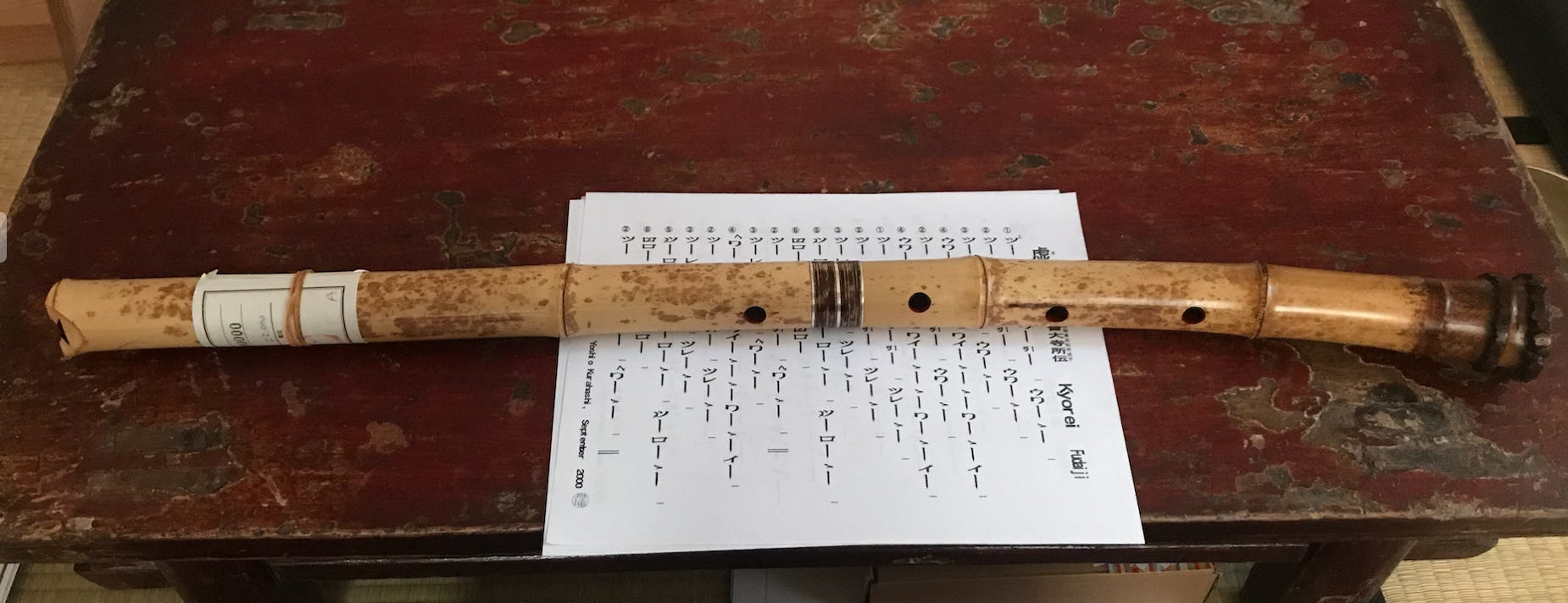
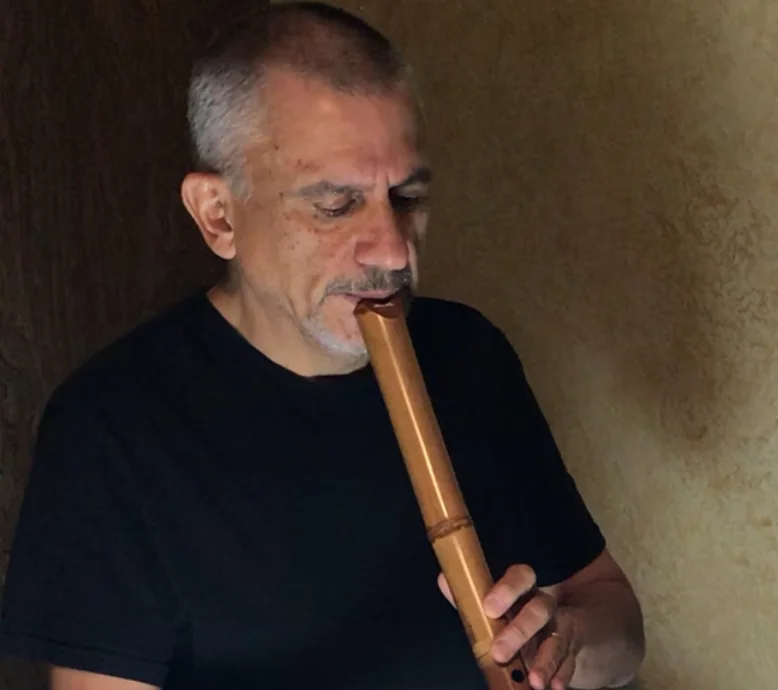

Alberto Battaglino is an Argentine-born, Texas-based technologist, musician, endurance athlete, and lifelong student of many traditions. His life moves between high-reliability systems, long-distance effort, Argentine musical sensibility, and the quiet discipline of breath.
Known in the shakuhachi community as Alberto Gyōja Battaglino (アルベルト行者バタグリノ), he studies the Jin Nyōdō / Mujuan lineage and the practice of suizen: sound as listening, patience, and attention. The name Gyōja (行者) — the Wanderer — reflects a path shaped by technology, music, endurance sport, and a stubbornly broad curiosity.
"Become a Wanderer. Prepare for the journey ahead. There is no destination, just a journey."一音成仏 · One tone, one Buddha
Selected recordings, photographs, and small field notes from the practice will live here — honkyoku takes, kuchi-shōga, and stills from the road. The shelf is intentionally short. New entries are added slowly, as the work asks for them.
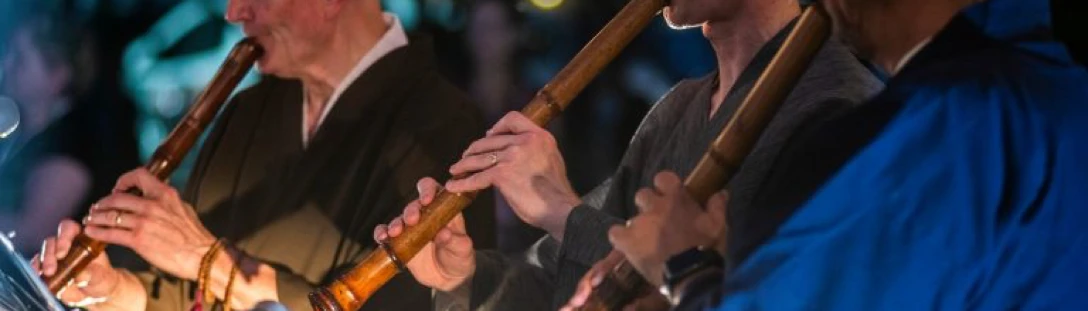
Audio & long-form posts are in preparation. Until then, please refer to the dojo's recordings via the lineage links below.
A short list of teachers, dojos and resources that shape this practice — the places a reader curious about the shakuhachi or the Mujuan Ryu can usefully wander next.
The Texas branch of the Mujuan Ryu, under Stan Kakudo Richardson.
Vocabulary lessons for studying Japanese alongside the shakuhachi path.
An entry point for the curious — history, repertoire, and tradition of the bamboo flute.
The "original pieces" — meditative solo repertoire at the heart of suizen practice.
The wandering, basket-hatted monks of the Fuke sect, in whose shadow the practice still walks.
If you would like to write — about the shakuhachi, the practice, lessons, or simply to share a quiet word with another traveller — you are welcome to reach out. The inbox is checked unhurriedly, in the spirit of the work itself.
Prepare for the journey ahead. Interact with other travellers, exchange your experiences, and become part of an ever expansive and self improving practice. Be one.